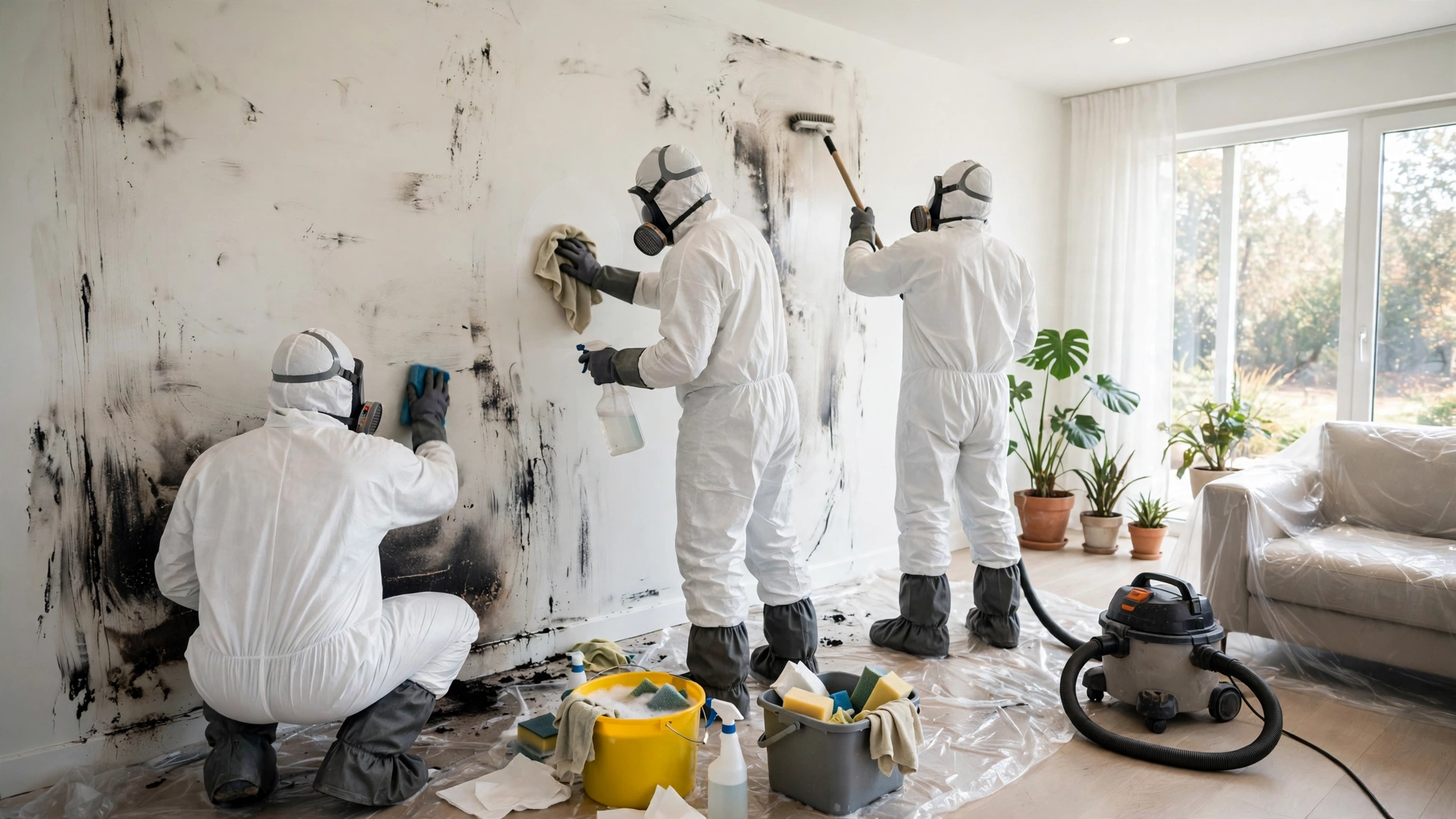
Blueprint: fire damage restoration, step by step — Content cleaning and pack-out in San Diego
Fire damage is rarely only what the flames touched. Smoke travels, soot settles where you cannot see it, and water from firefighting damages floors and walls that never burned. Restoration therefore has to deal with fire, smoke, and water in the right order, and a blueprint that skips the drying or the smoke source will leave a building that looks restored but still smells, or still holds moisture.
- 1
Step 1 — Do not re-enter the building until it has been declared safe, and do not turn on electrical systems or appliances that may have been damaged.
- 2
Step 2 — Assess structural safety, smoke spread, and water damage, and secure the affected areas before any cleaning begins.
- 3
Step 3 — Photograph damage for your records if it is safe to do so, and keep damaged items until you have been advised otherwise.
- 4
Step 4 — Remove debris and standing water first, so drying and cleaning start on a stable base rather than on top of wet, damaged material.
- 5
Step 5 — Clean smoke and soot room by room, including surfaces, contents, and air pathways, addressing the source of odour rather than masking it.
- 6
Step 6 — Dry wet materials fully, repair damaged sections, and restore finishes so rooms look and feel normal again.
- 7
Step 7 — Check the building room by room, confirm what was repaired, cleaned, or replaced, and keep itemised documentation for insurance.