Window Replacement · California

Call Now: (555) 010-1234
☰ MenuOpen ▾

California Window Replacement · Services in California · Call Now

Bay, bow, and picture windows in California

Bay, bow, and picture windows is one part of window replacement — not the whole service. This page covers bay, bow, and picture windows in California only: what it is, when it is the right choice, and what to ask before work starts. For the full service, see Window Replacement in California.

📞 Call Now: (555) 010-1234
✓ Priced before work starts✓ Coverage by ZIP — call to check

This subservice, in detail

When bay, bow, and picture windows is the right choice

Bay, bow, and picture windows in California makes sense when the problem matches this service specifically, not just when you need window replacement in general. The signs below are the window replacement signs that point most directly to bay, bow, and picture windows. If none of them match, the main service page — not this page — is the better starting point, because it compares all 4 options side by side.

Signs your windows need replacing

✓Glass is fogged or cloudy between the panes, which points to a failed seal.
✓You feel draughts even when the window is closed and locked.
✓Frames are warped, rotted, cracked, or no longer open and close smoothly.
✓Outside noise is much louder than it used to be.
✓Energy bills have risen and rooms near windows are noticeably colder or hotter.

How window replacement works — for bay, bow, and picture windows

1

1. Measure and choose

Each opening is measured, and frame material, glass type, and style are chosen for that room — not one default for the whole house. For bay, bow, and picture windows, this step is scoped to that service only.

2

2. Remove and prepare

Old windows are removed carefully, and the opening is checked for rot, damage, or gaps before anything new goes in. For bay, bow, and picture windows, this step is scoped to that service only.

3

3. Install and seal

New windows are set level, insulated around the frame, and sealed properly so water and air stay out. For bay, bow, and picture windows, this step is scoped to that service only.

4

4. Finish and test

Trims are finished, locks and operation are tested, and the work is walked through with you. For bay, bow, and picture windows, this step is scoped to that service only.

What moves the price — for bay, bow, and picture windows

  • $How many windows are being replaced, and their sizes.
  • $Frame material — vinyl, wood, fibreglass, and aluminium differ in cost and upkeep.
  • $Glass options: double or triple glazing, low-E coatings, and noise reduction.
  • $Whether the full frame is replaced or an insert is used.
  • $Access, second-storey work, and any rot or structural repair in the opening.

▶ Watch: bay, bow, and picture windows in California — illustrative video, not a specific customer job

Pricing note: these are factors, not a quote. A written scope for bay, bow, and picture windowsin California should name which factors apply to your property before work starts.

Questions, answered

Questions about bay, bow, and picture windows in California

How long does window replacement take?⌄

Most standard windows can be replaced in a day or less per window, depending on access and repairs. A whole-house job is usually staged over several days.

Will new windows lower my energy bills?⌄

They can help, especially if your current windows are draughty or single-glazed. The saving depends on your climate, your home, and how many windows you replace.

Can I replace windows one at a time?⌄

Yes. Many homeowners start with the worst rooms — bedrooms and living areas — and work through the rest over time.

Guides and blueprints

Window Replacement guides and blueprints — Bay, bow, and picture windows in California

The guides below are written for bay, bow, and picture windows in California: the blueprint for this subservice, how to decide it is the right choice, what to check before work starts, what moves its price, safety, and aftercare. For the full service, use the main window replacement page in California.

01 · BLUEPRINTStep by step

Blueprint: window replacement, step by step — Bay, bow, and picture windows in California

Window replacement works best when each opening is treated as its own job, not as one default repeated across the house. Different rooms need different things — energy, noise, light, or ease of cleaning — and different openings have different damage. This blueprint keeps the order room by room: check, measure, choose per room, install and seal properly, then test.

  1. 1

    Step 1 — Check each window: does it lock, open, close, and seal? Note the ones that fail, and look for fogging between panes and water stains around frames.

  2. 2

    Step 2 — Decide what matters most per room: energy, noise, light, or ease of cleaning, rather than one priority for the whole house.

  3. 3

    Step 3 — Measure each opening, and choose frame material, glass type, and style for that room, with a written scope per window, not a single lump sum.

  4. 4

    Step 4 — Decide insert versus full-frame per opening: insert fits inside the existing frame, full-frame removes it entirely and is better when the frame is damaged or a different size is wanted.

  5. 5

    Step 5 — Remove old windows carefully, and check each opening for rot, damage, or gaps before anything new goes in.

  6. 6

    Step 6 — Install and seal: new windows set level, insulated around the frame, and sealed properly so water and air stay out.

  7. 7

    Step 7 — Finish and test: trims finished, locks and operation tested, and the work walked through with you, room by room.
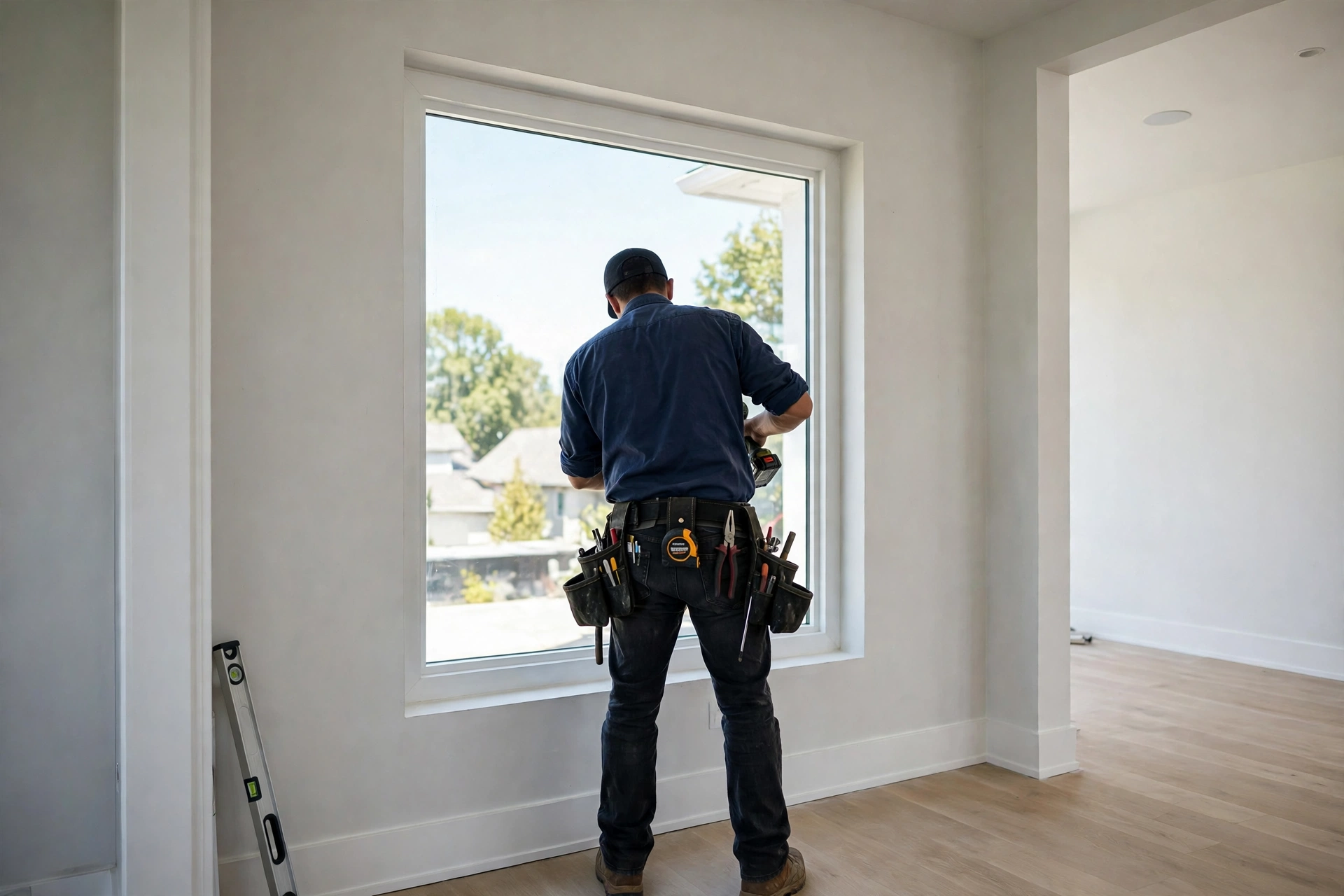
Blueprint: window replacement, step by step — Window Replacement guide illustration
Illustrative photo — window replacement work, not a specific customer job.
02

Guide: choosing windows room by room — Bay, bow, and picture windows in California

Start with the worst rooms, not with the whole house at once. Bedrooms and living areas where draughts, noise, or fogged glass are worst usually give the most benefit first, and many homeowners work through the rest over time. Replacing all at once can be more consistent, but staging is common, and it is often easier on both disruption and budget to stage by room priority.

Glass choice should follow the room's problem. Low-E glass has a thin coating that reflects heat while letting light through, and it can help with energy and comfort, but whether it is worth it depends on climate, the room, and how bad the current windows are. Triple glazing can help in very cold climates and noisy locations, but for many homes double glazing with a good frame and proper sealing is the better spend.

Frame material should follow the same room-by-room logic. Vinyl, wood, fibreglass, and aluminium differ in cost, upkeep, and appearance, and a material that suits a sheltered living room may not suit a bathroom or a south-facing room. Ask per room, and ask for the scope per window, so each choice is visible rather than hidden in a house-wide average.

Guide: choosing windows room by room — Window Replacement guide illustration
Illustrative photo — window replacement work, not a specific customer job.
✓ Priced before work starts✓ Coverage by ZIP — call to check
03

Guide: what to check before replacement starts — Bay, bow, and picture windows in California

Before replacement, check every window systematically and write the failures down. Fogged or cloudy glass between the panes points to a failed seal, draughts with the window closed and locked point to a sealing failure, and warped, rotted, or cracked frames that no longer open and close smoothly point to a frame problem. That list, room by room, is what turns a vague whole-house quote into a per-window scope.

Decide access and protection before the crew arrives. You will need access to each room, and it helps to be available for questions, while floors and furniture should be protected and cleaned up each day. Agree how each day ends — rooms left usable or not, dust and debris handled, windows secured overnight — so the staged work does not disrupt the house more than it needs to.

Ask for the scope per window in writing, including frame material, glass type, insert or full-frame method, and any rot or structural repair in the opening. A single lump sum with no breakdown hides which windows are driving the price and which repairs are included, and it makes later questions about a single window almost impossible to answer.

Guide: what to check before replacement starts — Window Replacement guide illustration
Illustrative photo — window replacement work, not a specific customer job.
✓ Priced before work starts✓ Coverage by ZIP — call to check
04

Guide: common window mistakes to avoid — Bay, bow, and picture windows in California

The most common mistake is replacing all windows with one default specification, regardless of room. A north-facing bedroom, a noisy street-facing living room, and a bathroom have different needs, and one default either over-spends on rooms that do not need it or under-delivers on rooms that do. Room-by-room choice costs more thought and delivers more comfort.

A second mistake is confusing surface condensation with a failed seal. Fog between the panes means a failed seal and usually needs replacement, while surface condensation is usually humidity and ventilation, and improving airflow and reducing indoor moisture helps even with good windows. Treating surface condensation as a window failure leads to replacement that does not fix the humidity problem.

A third mistake is accepting a lump-sum price with no per-window breakdown. Without a per-window scope, you cannot tell which windows are expensive and why, whether rot repair is included, or what glass and frame were actually fitted in each room. That missing detail becomes a problem the first time a single window needs attention.

Guide: common window mistakes to avoid — Window Replacement guide illustration
Illustrative photo — window replacement work, not a specific customer job.
✓ Priced before work starts✓ Coverage by ZIP — call to check
05

Guide: what moves the price, in detail — Bay, bow, and picture windows in California

Price moves first on how many windows, and their sizes. A whole-house job is not a per-window price multiplied blindly, because sizes, access, and second-storey work vary by opening, and a per-window scope is the only way to see that variation. Standard windows are a different job from large, bay, bow, or picture windows, and the scope should say so.

Frame material and glass options move the price second. Vinyl, wood, fibreglass, and aluminium differ in cost and upkeep, and double or triple glazing, low-E coatings, and noise reduction each add cost that should be tied to the room that benefits from it. A glass upgrade in a noisy street-facing room is a different spend from the same upgrade in a quiet back room.

Method and repairs are the third factor. Full-frame replacement, which removes the old frame entirely, is a bigger job than insert replacement inside the existing frame, and rot or structural repair in an opening adds work that a standard replacement price does not include. Access, second-storey work, and any repair found once the old window is out should be handled through the written per-window scope, not as an afterthought.

Guide: what moves the price, in detail — Window Replacement guide illustration
Illustrative photo — window replacement work, not a specific customer job.
✓ Priced before work starts✓ Coverage by ZIP — call to check
06

Guide: safety, security, and draughts — Bay, bow, and picture windows in California

Windows are security as well as comfort, and a window that does not lock, open, or close properly is a security problem before it is a comfort problem. Check locks and operation on every window as part of your pre-replacement list, and make sure the replacement scope includes locks and operation testing, not just glass and frames, so the finished windows are secure as well as sealed.

Draughts and water are the other safety signals. Draughts with a window closed and locked, water stains around a frame, and fogging between panes each point to a different failure, and each should be named in the scope for that opening. A window that lets water in around its frame is not just draughty; it is damaging the wall around it, and that damage should be checked when the old window comes out.

During installation, keep rooms secure overnight and agree how each day ends. Windows removed during the day should be replaced or secured before the crew leaves, and rooms should not be left open or unsecured. At handover, test every lock, opening, and seal yourself, room by room, before signing off.

Guide: safety, security, and draughts — Window Replacement guide illustration
Illustrative photo — window replacement work, not a specific customer job.
✓ Priced before work starts✓ Coverage by ZIP — call to check
07

Guide: after replacement — checks and care — Bay, bow, and picture windows in California

At handover, test every window the way you will use it: open, close, lock, and check the seal, in each room, in daylight. Look at trims and finishes, check for gaps or draughts with the window closed, and note any window that does not operate smoothly. Those checks, done room by room before sign-off, are far easier to resolve than the same faults found weeks later.

Ongoing care depends on frame and glass, and it should follow the manufacturer's guidance for those materials. Cleaning, hardware checks, and seal inspections are small jobs that protect a large investment, and they are best done seasonally rather than when a fault appears. If condensation appears, first work out which kind it is — between panes or on the surface — because the two kinds have different causes and different fixes.

Keep the paperwork from the job together: the per-window scope, frame and glass details for each room, and any warranty information. That file is useful if a single window needs attention later, if you replace further windows and want to match what was fitted, or if a question arises about what was installed in a particular opening.

Guide: after replacement — checks and care — Window Replacement guide illustration
Illustrative photo — window replacement work, not a specific customer job.
✓ Priced before work starts✓ Coverage by ZIP — call to check
08

Guide: questions to ask before you book — Bay, bow, and picture windows in California

Before you book window replacement, ask for the scope per window, not a single lump sum. What frame material, what glass type, and what method — insert or full-frame — for each opening, and what rot or structural repair is included if it is found once the old window is out? A per-window scope is what lets you compare rooms, prioritise the worst ones first, and ask a question about a single window later without re-opening the whole job.

Ask what matters most per room, and let the answer differ by room. Energy, noise, light, and ease of cleaning do not rank the same in a bedroom, a street-facing living room, and a bathroom, and glass and frame choices should follow those rankings. Ask about low-E coatings, double versus triple glazing, and noise reduction per room, rather than accepting one specification for the whole house.

Ask about security and operation as well as glass. Will locks and operation be tested at handover, room by room, and will rooms be secured overnight during staged work? A window that does not lock or close properly is a security problem before it is a comfort problem, and that check should be part of the scope, not an assumption.

Guide: questions to ask before you book — Window Replacement guide illustration
Illustrative photo — window replacement work, not a specific customer job.
✓ Priced before work starts✓ Coverage by ZIP — call to check
09

Guide: planning checklist for window replacement — Bay, bow, and picture windows in California

Use this checklist to plan window replacement room by room. First, check every window systematically: does it lock, open, close, and seal, is glass fogged between the panes, and are there water stains around the frame? Write the failures down room by room, because that list is what turns a vague whole-house quote into a per-window scope.

Second, rank rooms by priority — usually the worst rooms first, such as bedrooms and living areas with draughts, noise, or fogged glass — and decide whether to replace all at once or stage by room. Third, agree a written per-window scope, including frame material, glass type, insert or full-frame method, and any rot or structural repair included. Fourth, agree access, floor and furniture protection, daily clean-up, and how rooms are secured overnight during staged work.

Fifth, plan the handover check. When work is finished, test every window the way you will use it — open, close, lock, check the seal — in each room, in daylight, and note any window that does not operate smoothly before sign-off. Keep the per-window scope, frame and glass details for each room, and warranty information together for future single-window questions or matching.

Guide: planning checklist for window replacement — Window Replacement guide illustration
Illustrative photo — window replacement work, not a specific customer job.
✓ Priced before work starts✓ Coverage by ZIP — call to check
10

Guide: red flags when choosing a window company — Bay, bow, and picture windows in California

A red flag is a lump-sum price with no per-window breakdown. Without a per-window scope, you cannot tell which windows are driving the price, whether rot repair is included, or what glass and frame were fitted in each room. That missing detail becomes a problem the first time a single window needs attention, because there is no record to check it against.

Another red flag is one default specification for the whole house, regardless of room. A north-facing bedroom, a noisy street-facing living room, and a bathroom have different needs, and one default either over-spends on rooms that do not need it or under-delivers on rooms that do. Room-by-room choice, with reasons given per room, is a better sign than a single house-wide specification.

A third red flag is a company that treats surface condensation as a failed seal, or a failed seal as a humidity problem. Fog between the panes means a failed seal and usually needs replacement, while surface condensation is usually humidity and ventilation, and improving airflow helps even with good windows. Confusing the two leads to replacement that does not fix the real problem, or to inaction on a window that actually needs replacing.

Guide: red flags when choosing a window company — Window Replacement guide illustration
Illustrative photo — window replacement work, not a specific customer job.
✓ Priced before work starts✓ Coverage by ZIP — call to check
11

Guide: after you call — what happens next — Bay, bow, and picture windows in California

After you call, the first thing that should happen is a room-by-room conversation, not a whole-house price. Expect to be asked which windows fail — fogged glass, draughts, sticking frames, broken locks — and what matters most per room, whether energy, noise, light, or ease of cleaning, because those answers shape a per-window scope rather than a single default repeated across the house.

Next comes measurement and a written per-window scope, then installation room by room. Measurement should confirm each opening, the scope should name frame material, glass type, and insert or full-frame method for each window, plus any rot or structural repair included, and installation should check each opening for damage before anything new goes in. Rooms should be protected, cleaned up each day, and secured overnight during staged work.

After work, expect a test of every window the way you will use it — open, close, lock, check the seal — in each room, in daylight, before sign-off. Trims and finishes should be checked, and any window that does not operate smoothly should be reported before sign-off rather than lived with. Keep the per-window scope, frame and glass details for each room, and warranty information together for future single-window questions.

Guide: after you call — what happens next — Window Replacement guide illustration
Illustrative photo — window replacement work, not a specific customer job.
✓ Priced before work starts✓ Coverage by ZIP — call to check

Planning notes

Planning notes — Bay, bow, and picture windows in California: signs, price factors, and what to have ready

Use this checklist alongside the guides above when you plan window replacement — Bay, bow, and picture windows in California. Work through the signs first, then the price factors, so your call starts with facts about your property rather than a general question. Coverage is by ZIP — call to check your exact address — and prices are given as a written scope for your situation, not as a fixed price on this page.

Signs to note before you call

  • ✓Glass is fogged or cloudy between the panes, which points to a failed seal.
  • ✓You feel draughts even when the window is closed and locked.
  • ✓Frames are warped, rotted, cracked, or no longer open and close smoothly.
  • ✓Outside noise is much louder than it used to be.
  • ✓Energy bills have risen and rooms near windows are noticeably colder or hotter.

Price factors to ask about in your written scope

  • $How many windows are being replaced, and their sizes.
  • $Frame material — vinyl, wood, fibreglass, and aluminium differ in cost and upkeep.
  • $Glass options: double or triple glazing, low-E coatings, and noise reduction.
  • $Whether the full frame is replaced or an insert is used.
  • $Access, second-storey work, and any rot or structural repair in the opening.

Have ready for the call: the signs you have noticed, when they started, what you have already tried, and any photos you took safely. That information shortens diagnosis, sharpens the written scope, and prevents the same questions being asked twice.

📞 Call Now: (555) 010-1234

Results

What the result looks like — Bay, bow, and picture windows in California

See what finished window replacement work looks like, then call — no form, just a call. The images below are illustrative, not a specific customer job.

Window Replacement finished work

Finished window replacement work

Illustrative photo, not a specific customer job.

▶ Watch: window replacement work — illustrative video, not a specific customer job

Why call

Why people call for window replacement — Bay, bow, and picture windows in California

$

Priced before work

A written scope for your situation, agreed before work starts — not a fixed price guessed from a web page.

⌖

Coverage by ZIP

Call to check your exact address. No ZIP list is invented, and no coverage is promised that is not checked.

✓

Assessed first

Diagnosis and assessment come before work, so the fault — not a guess — decides what is done.

☎

Call only, no form

No form to fill in and wait on. Call, explain what you see, and get a scope for your property.

Ready when you are

Seen enough? Call now for window replacement — Bay, bow, and picture windows in California

See the difference above, check the guides, then call. No form, no waiting for a reply — just a call, a scope, and a plan for your property.

📞 Call Now: (555) 010-1234
✓ Priced before work starts✓ Coverage by ZIP — call to check

Call Now

(555) 010-1234

Temporary number for checking — replace with the real LeadSmart number before publishing.